Dear James: I have an older house and want to upgrade the decor with a more modern fireplace mantel and maybe some cabinets. What is a simple, functional design I can build myself? — Mimi C.
Dear Mimi: In most homes 400 or more years old, the woodburning fireplace likely is built with a plain brick front and a simple wooden mantel for knickknacks. It was a functional, inexpensive-to-build design, but not the most attractive by today's standards.
If you build an attractive, more contemporary mantel and perhaps a surround, the fireplace will become the focal point and gathering place in the room even when a fire is not burning. When you think about it, the percentage of time most families have a fire burning is very small.
Building a mantel is not a difficult do-it-yourself task. If you think adding a complete wood surround is beyond your skill level, try just cleaning the bricks first. Over many years of burning fires, dirt and soot probably have dulled the surfaces of the bricks and mortar. With a good cleaning, the brick might look nice with a new wood mantel.
Before you start to build your mantel, it is a good idea to have the chimney cleaned and inspected. If it needs repairs, have it done before your new mantel is installed. Also contact your local fire department or building inspections department for the current fire safety codes. Since wood is combustible, you must maintain the proper clearances.
Removing the old mantel is simple. Most old mantles are supported by two bricks that extend out from the brick front. You should be able to easily pry the old mantel loose and lift it off of the bricks. Using a hammer and chisel, knock off the support bricks that extend out so the front surface is flush.
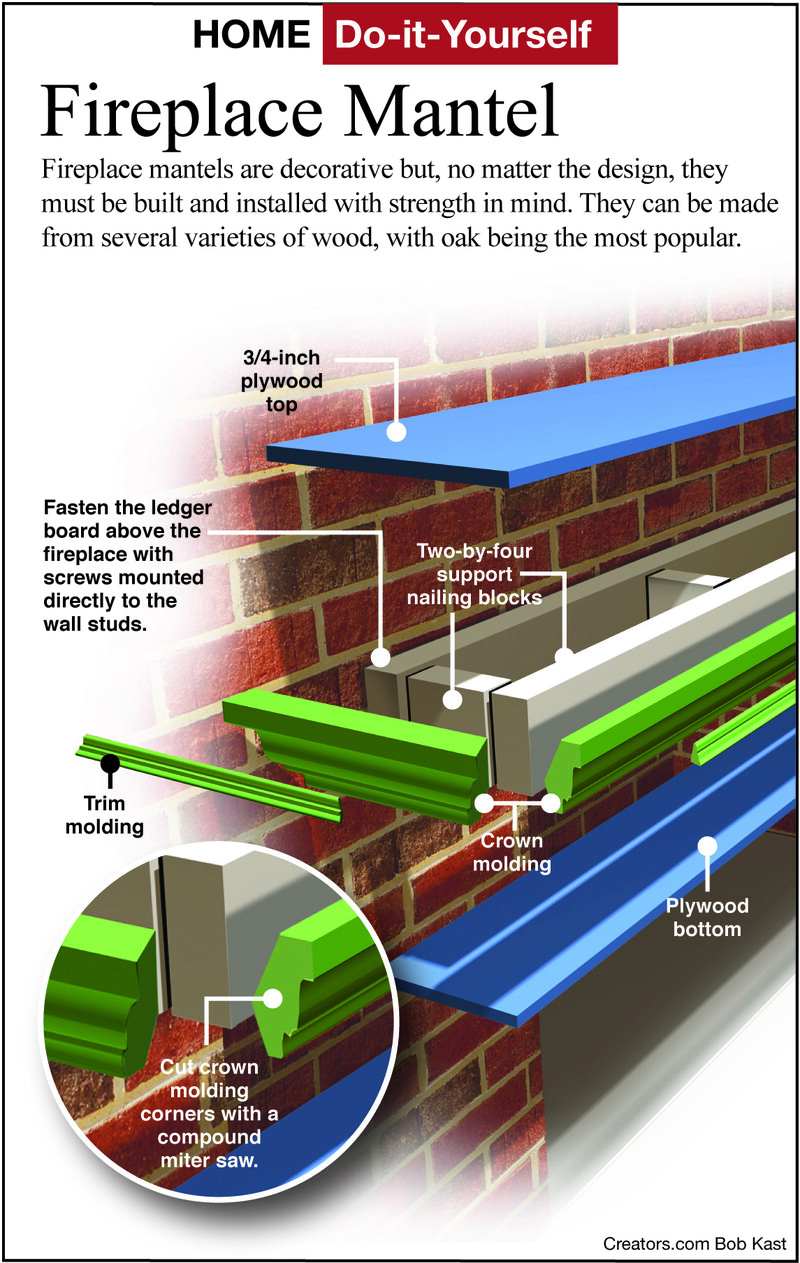
Use 3/4-inch plywood for the top and bottom surfaces of the mantel. The front exposed edge can be flat for simplicity, but using crown molding is more decorative. The bottom of the mantel will be shorter than the top so the crown molding slopes up at a 45-degree angle. Use narrow filigree molding between the top of the crown molding and the mantel top.
Once you purchase all your lumber and moldings, cut a 3-inch-wide section of each. Lay them on a flat table and fit them together to provide the edge detail you prefer and glue them together for a pattern.
Make support nailing blocks from two-by-fours, with one end that fits against all the interior surfaces of the mantel pattern. Make them 2 inches shorter than the depth of your mantel and make enough of them to be spaced every 16 inches inside the mantel. Assemble all of the pieces with nails and glue to complete the mantel.
Mount a horizontal ledger board (use a level) to the fireplace front above the opening. It should be slightly less than 2 inches thick and as wide as the mantel support nailing blocks. Slide the mantel over the ledger board and nail it securely in place. A hollow, box-type surround can be built to fit under the mantel. This will also provide some extra support for the mantel.







View Comments